Russia hit a grim Covid-19 milestone this week: According to Johns Hopkins University, the country now ranks second in the world for confirmed coronavirus cases.
The Russian capital has been hardest hit. Of Russia’s total of 281,752 confirmed cases, over half — 142,824 — are in Moscow, the country’s coronavirus headquarters said Sunday. But the virus is now spreading across Russia’s regions, an enormous landmass that covers 11 time zones and includes some of the country’s most remote and impoverished places.
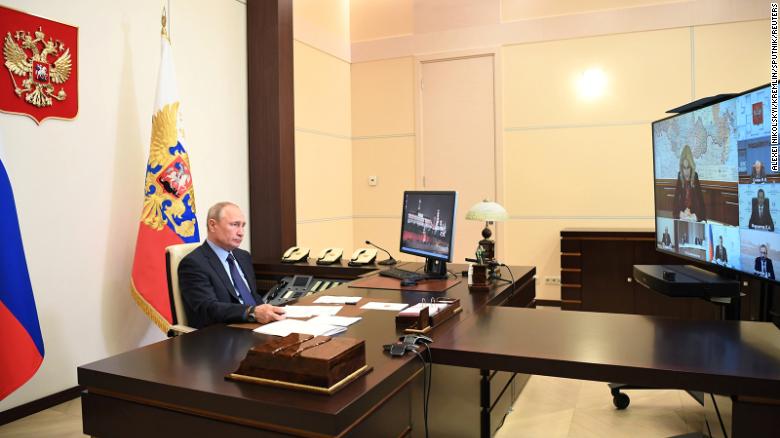
In a video conference meeting on Monday with Russia’s 85 regional heads, Russian President Vladimir Putin said the burden would fall to local leaders to decide whether to continue lockdown measures or to begin cautiously lifting restrictions to reopen the economy.
“We have a big country,” he said. “The epidemiological situation varies across the regions. We factored this in before, and now at the next stage, we have to act even more specifically and carefully.”
According to official statistics, the pandemic has reached all of Russia’s constituent parts, from the Kaliningrad exclave between Poland and Lithuania to the remote Chukotka autonomous okrug, across the Bering Strait from Alaska. Russia’s regions are also starting to report their own numbers, sometimes showing a disparity between the nationally published statistics on mortality and infections published on the stopcoronavirus.rf portal and on local government websites.
Kaliningrad region, for instance, reported 13 deaths as of Friday, while the nation’s coronavirus headquarters reported 11. The contrast between national and local mortality figures was even more stark in Chelyabinsk region in the Ural mountains: Local authorities there reported 10 Covid-19-related deaths in addition to the six deaths attributed directly to coronavirus on the national portal.
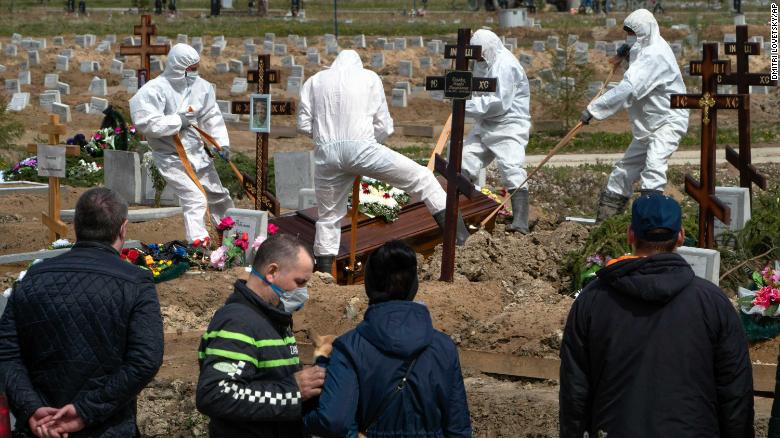
Russian Vice-Premier Tatiana Golikova told Russian news outlets this week that the Russian government has not manipulated statistics, but Russia’s mortality figures have become a political football. Observers have noted the comparatively low overall number of deaths in Russia — a total that currently stands at 2,631, according to the country’s coronavirus headquarters — even as the country takes second place in the world for the number of confirmed cases, behind the United States.
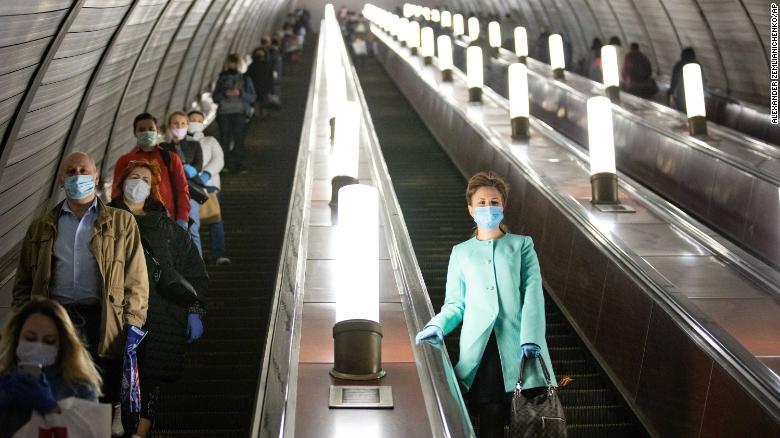
In Moscow, health officials hit back at media reports that it was underreporting Covid-19 fatalities, saying its data was “absolutely open.” But the city’s health department also acknowledged that it only counts deaths that were found through post-mortem autopsy to have been caused directly by coronavirus complications.
And the capital is proceeding with caution. Earlier this week, Putin announced a gradual easing of restrictions around the country, at the discretion of local leadership. But Moscow Mayor Sergey Sobyanin subsequently made clear he was in no rush to end lockdown.
“Premature removal of restrictions carries a real risk of a second pandemic,” he said in a statement Thursday. “Unjustified delays will also hit people in the strongest way.”
Sobyanin, in many respects, has been the public face of Russia’s fight with coronavirus, as Putin shelters at his residence of Novo-Ogaryovo.
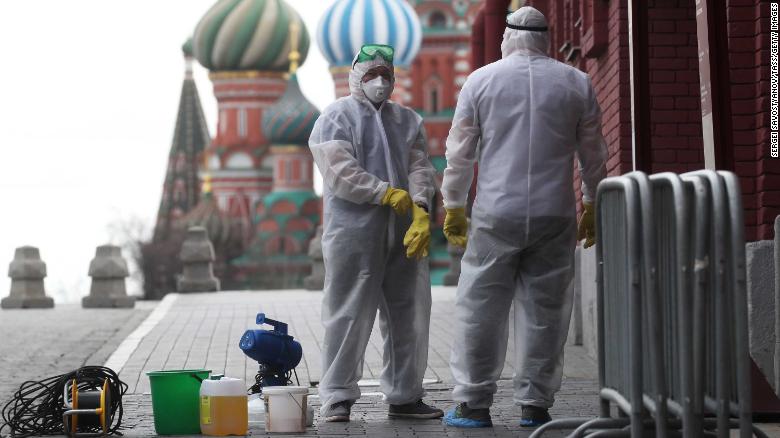
As cases began to pick up pace in April Moscow authorities opened a new coronavirus hospital, built in around a month. And Sobyanin’s government oversaw the introduction of electronic passes to enforce lockdown measures, controversial measures ahead of the rest of the country. The city is also launching a large coronavirus screening program that will be free to the public.
Healthcare system in crisis
Moscow, in many ways, is better equipped to deal with the crisis than Russia’s less well-off regions. It has a concentration of wealth and budgetary resources that is the envy of the rest of the country.
Under Sobyanin, the Russian capital, which in pre-coronavirus days was transforming itself into an Instagram-friendly landscape of refurbished parks, hip restaurants and high-end real estate, has enjoyed a municipal spending spree.
The leading business daily Vedomosti reported last year that the city’s budget on beautification projects over the past decade — more than 1.5 trillion rubles ($20.5 billion), according to Moscow budget data — was nearly equivalent to the total amount spent on similar projects around the country.
One doesn’t have to travel far outside of Moscow to see the disparities in living standards and the decrepitude of the healthcare system.
A viral YouTube video recently posted by the popular Russian journalist Irina Shikhman showed a visit to the town of Ivanteyevka, a town just over 10 miles outside the city limits of Moscow of a local clinic as it receives a delivery of personal protective equipment. As Shikhman begins the formal interview, a masked doctor says she had “no complaints” about the supplies and had enough personnel to handle patients.
But the images in the video, which has had more than 3,327,000 views, shows the peeling paint and poorly lit interior of the facility, and underscores the shocking condition of Russia’s provincial healthcare system. It seems that in this sprawling country, time is not the only thing that differs between the capital and the regions.
This story has been updated.
Credit: Source link