A comet named “Neowise” has lit up the skies, wowing people across the globe.
Being able to catch a glimpse of the comet – officially known as C/2020 F3 – is a once-in-a-lifetime opportunity as it won’t pass Earth again for another 6800 years, according to the International Dark-Sky Association.
It’s extremely rare for comets to be visible to the naked eye. Comet Hale-Bopp, which experts describe as the “last great comet,” was seen in 1997, which was visible for a year and a half. Neowise is not considered a “great comet,” though it is still a spectacle.
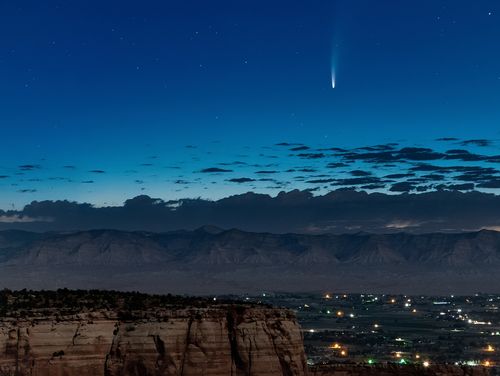
On July 3, Comet NEOWISE made its closest approach to the sun.
“This very close passage by the sun is cooking the comet’s outermost layers, causing gas and dust to erupt off the icy surface and creating a large tail of debris,” NASA said in an article last week.
“And yet the comet has managed to survive this intense roasting.”
It was spotted in England too, where photographer Jon Rees described the comet as a “little beauty.”
“A chance to shoot Comet Neowise over my favourite pier was very very special!” Rees wrote in the caption of his photo he posted to Instagram.
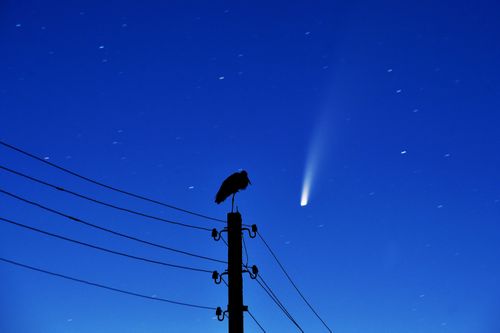
The window to spot NEOWISE is closing quickly – the fleeting comet is expected to remain visible in the northern hemisphere just through July.
If you’re fortunate enough to live north of the equator, here are some tips on how to best catch a glimpse of it, courtesy of the experts with Sky & Telescope.
- Before July 14, the best time to see the comet was before the sunrise. But from the today onward, you’re more likely to see the comet in the evening sky.
- As it moves away from the sun and edges closer to Earth, the comet will fade away, but your chance of catching it improves if you can find a location that’s free of light pollution, meaning street lights, car headlights, apartment lights, and the like.
- “Start looking about one hour after sunset, when you’ll find it just over the northwestern horizon as the last of twilight fades into darkness,” the editors of Sky & Telescope said in a news release. “Look about three fists below the bottom of the Big Dipper, which is hanging down by its handle high above, and from there perhaps a little to the right.”
- On July 23, Neowise will be at its closest to Earth, but by then, you’ll probably need binoculars or a telescope. If you want to take a picture of the comet, use a tripod and a camera that’s able to take time exposure shots that are several seconds long, according to Sky & Telescope.
Credit: Source link